
In the Footsteps of Giants: The U.S. Civil Rights Trail in Georgia
Spanning 15 states and more than 100 landmarks, the U.S. Civil Rights Trail is a self-guided journey through the marches, speeches, and struggles that shaped the nation’s history. The walls of these schools, churches, courthouses, museums, and other sites do indeed talk – coming together to tell the stories of the people and places that shaped a movement. In Georgia, the journey includes both official stops along the U.S. Civil Rights Trail and additional sites whose stories further deepen our understanding of the Civil Rights Movement and underscore the state’s pivotal role in its history.
Jump to:
Atlanta: A Living Legacy
As the birthplace of Martin Luther King, Jr. – and the Civil Rights Movement itself – Georgia offers an intimate, experiential glimpse into the lives and accomplishments of its proudest and most pivotal figures. This is the figurative “room where it happened,” and the state’s high concentration of significant landmarks provides depth and detail that can only be found here. Add to this the layered, lively culture of modern Georgia, and visitors can expect to bolster their beautiful travel memories with moments of real meaning.
Your journey embarks in Atlanta, where history comes to life through vibrant neighborhoods, engaging museums, and important cultural landmarks. For anyone seeking a deeper understanding of Black America’s fight for equality, a journey through Atlanta’s many milestones is essential. Start from the beginning in the Sweet Auburn District, where Dr. King was born, raised, and began his life’s work.
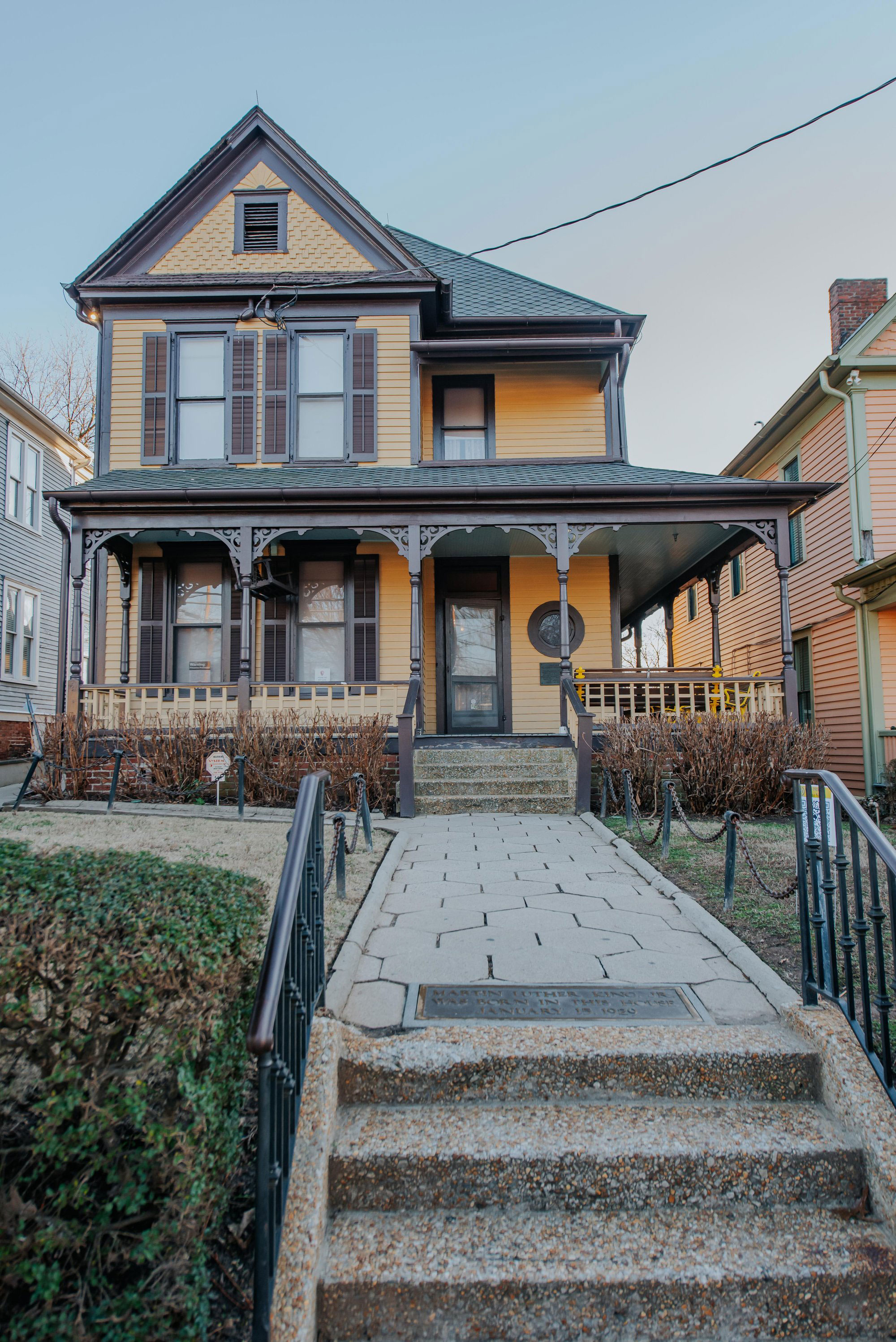
As you explore the 35-acre Martin Luther King, Jr. National Historical Park & Preservation District, you’ll have the opportunity to walk in the young activist’s footsteps and learn more about the milestones of his early life. Get your bearings at the Visitor Center and see what’s on exhibit at the attached D.R.E.A.M. Gallery before heading outside to take in the thought-provoking “Behold” Monument that commemorates the historic principles that guided Dr. King’s work.
“It is quite easy,” said Dr. King in 1950, “to think of a God of love, mainly because I grew up in a family where love was central and lovely relationships were ever present.” On your tour of Dr. King’s Birth Home, you’ll see where these foundational values were built while absorbing an illuminating ranger-led presentation about the leader’s boyhood.
The son, grandson, and great-grandson of Baptist preachers, Dr. King would one day minister to his neighborhood flock at nearby Ebenezer Baptist Church. During your tour here, you’ll hear recordings of his most stirring speeches. Before you leave the district, pay your respects at The King Center, where Dr. and Mrs. King rest side by side, then take a stroll through the “I Have a Dream” World Peace Rose Garden: a living symbol of their shared legacy.
Just a short drive away is the Jimmy Carter Presidential Library & Museum, where you can experience a day in the life of the late 39th president – including a life-sized replica of Carter’s Oval Office, a glimpse of his Nobel Peace Prize, and a variety of interactive exhibits highlighting his lifetime of humanitarian work. Then, it’s time to pause for soul food and conversation at Paschal’s Restaurant & Bar. Flouting the city’s strict segregation laws, this iconic eatery provided a safe space for paradigm-shifting dialogue between Black and white civil rights leaders.
New to the trail in 2025
See Atlanta’s Madame C.J. Walker Museum, which celebrates the extraordinary contributions of the entrepreneur, philanthropist, and activist. Housed in the building that launched Walker’s thriving beauty business – and later, WERD, the first U.S. radio station owned and operated by African Americans – this eclectic collection highlights the ingenuity and grit of Walker’s journey to becoming America’s first self-made female millionaire. You’ll see memorabilia like Jim Crow-era cameras, obscure activist photos, vintage hair tools, and an unrivaled collection of rare vinyl from artists like Sam Cooke, Aretha Franklin, and others.
Accessibility along the trail
Are you or a member of your group traveling with limited mobility? All of the open landmarks mentioned in this article accommodate wheelchairs in most areas, and some larger facilities, like the Martin Luther King, Jr. National Historical Park & Preservation District and the Jimmy Carter Presidential Library & Museum, also offer a limited number of wheelchairs for patrons to use, free of charge.

Dublin: A Dream Is Born
Though Dr. King was born in Atlanta, his Dream was born in Dublin. It was here, in the First African Baptist Church, that the budding leader gave his first public speech at the age of 15. To stand with the charismatic student on the threshold of greatness, reserve a spot in “One Day: Dublin’s Civil Rights Experience” – a reader’s theater that chronicles young Dr. King’s inaugural passion play, with you and other visitors reenacting the events of this historic day. Guided church tours are available.
Just across the street, at Martin Luther King, Jr. Monument Park, you can hear a moving reenactment of Dr. King’s first speech, with the church’s humble facade in view. The park’s immersive, multisensory assemblage commemorates key moments in the Movement with painted murals, photographic displays, kinetic sculpture, and an informative audio tour.
On your way out of Dublin, you may also want to swing by the Dudley Motel and Retreat Cafe, which served as an informal – but important – headquarters for Dr. King’s meetings with like-minded leaders. Today, the classic mid-century buildings, awaiting upcoming preservation efforts, are not open to the public. But they’re worth a peek from the outside, if only to imagine the history-making conversations that took place here over pie and coffee.
Albany: Gathering Mass
Throughout the Movement, powerful moments unfolded across Georgia in towns large and small. A series of anti-segregation protests in 1961-62, now known as the Albany Movement, drew the national spotlight and made Albany a must-see stop on the Civil Rights Trail.
Start your deep dive into this period at the Charles M. Sherrod Civil Rights Park, where a fountain honors the student activist’s role in the fight for Black voting rights. At the Albany Civil Rights Institute (call ahead for hours), a collection of artifacts and multimedia exhibits brings this era to life; you can read Dr. King’s personal handwritten letters and even listen to extraordinary firsthand accounts of this pivotal time from the Institute’s oral history database.
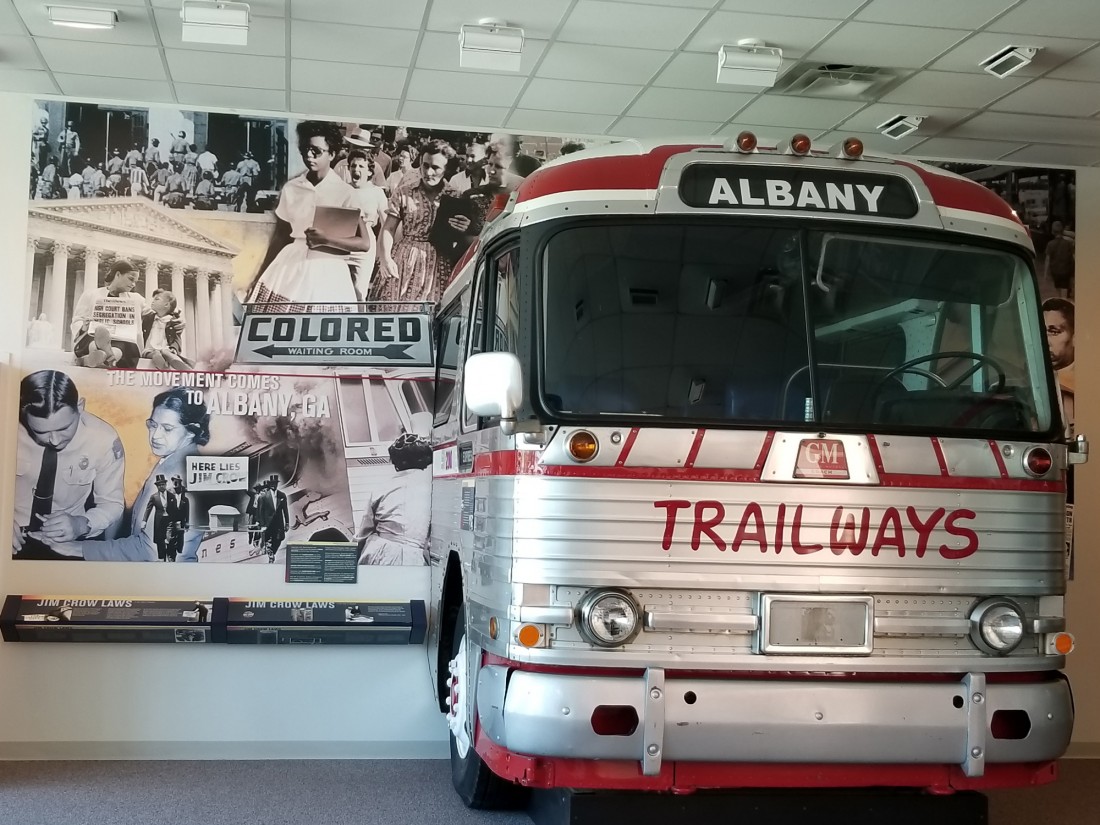
The Institute is housed in the Old Mount Zion Baptist Church, where Dr. King spoke to a crowd of thousands before leading his famous march to the Trailways Bus Station for a sit-in condemning the company’s segregation policies. As you exit through the “White” or “Colored” doorway, look for Dr. King’s footsteps, symbolically portrayed in the sidewalk cement.

Midway: Building Momentum
The lessons learned in Albany were soon applied in Midway, your next stop along the U.S. Civil Rights Trail in Georgia, where Dr. King and his deputies laid the foundation for his history-making March on Birmingham.
Midway’s Dorchester Academy was founded after the Civil War to provide freed slaves with the opportunity for an education, and ultimately became an important way station for civil rights leaders as they traveled throughout the area. Visit the on-site museum, where three large murals depict the school’s history in living color, and make an appointment to tour the restored dormitory, where you’ll find Dr. King’s room exactly as he left it – with his personal Bible open for reflection.
If you’re visiting in June, you can take part in the annual Walk to Dorchester – physically walking in the footsteps of these groundbreaking students as you follow their 12-mile trek to class and learn more about the academy’s historical significance.
Augusta & Savannah: Tending the Flock
Raised in the church as the son, grandson, and great-grandson of Baptist preachers, Martin Luther King, Jr. would be ordained himself, ministering at Ebenezer Baptist Church in Atlanta – so it’s not surprising that much of the Movement’s community organizing took place in houses of worship.
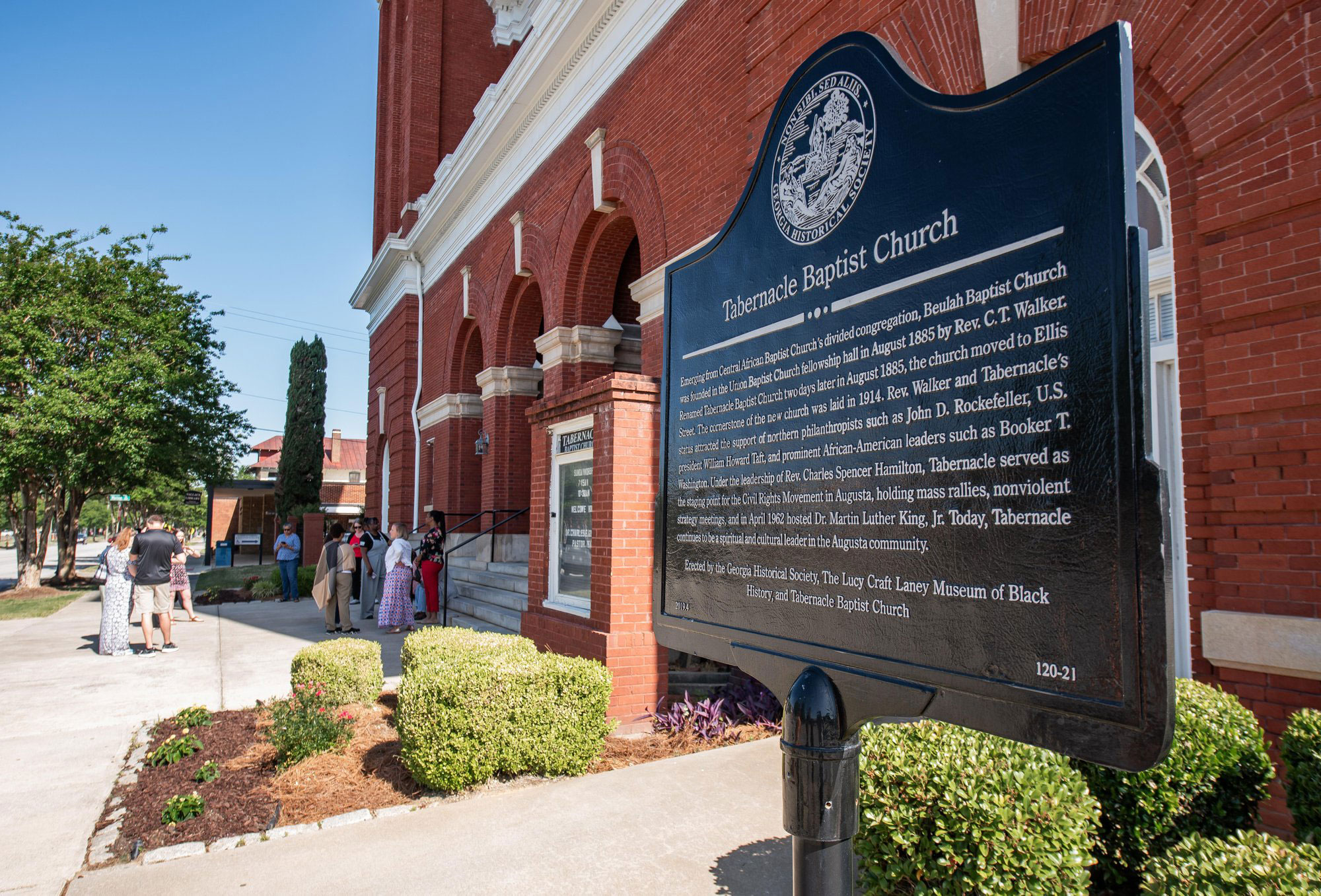
Many church leaders were also pivotal players in the fight for civil rights, and sanctuaries like Augusta’s Tabernacle Baptist Church served their congregations and communities alike. In a powerful 1962 speech here, Dr. King called for unity and action. Today, the church is a stop on the Golden Blocks Walking Tour, led by local historian Corey Rogers. You’ll get his expert perspective while standing in the space where Dr. King’s voice once echoed.
Savannah, too, provided a sanctuary for Dr. King and others fighting for civil rights. Founded in 1773, First African Baptist Church – the oldest continuously operating African American church in the country – was also an important stop on the Underground Railroad. On your free guided tour, walk in the footsteps of history over the subfloor that sheltered runaways, sit in timeworn pews handcrafted by enslaved people, and take in the Nine-Patch Quilt Ceiling: a moving tribute to the church’s role in shepherding escaped slaves to their new lives.
Americus: Marching Forward
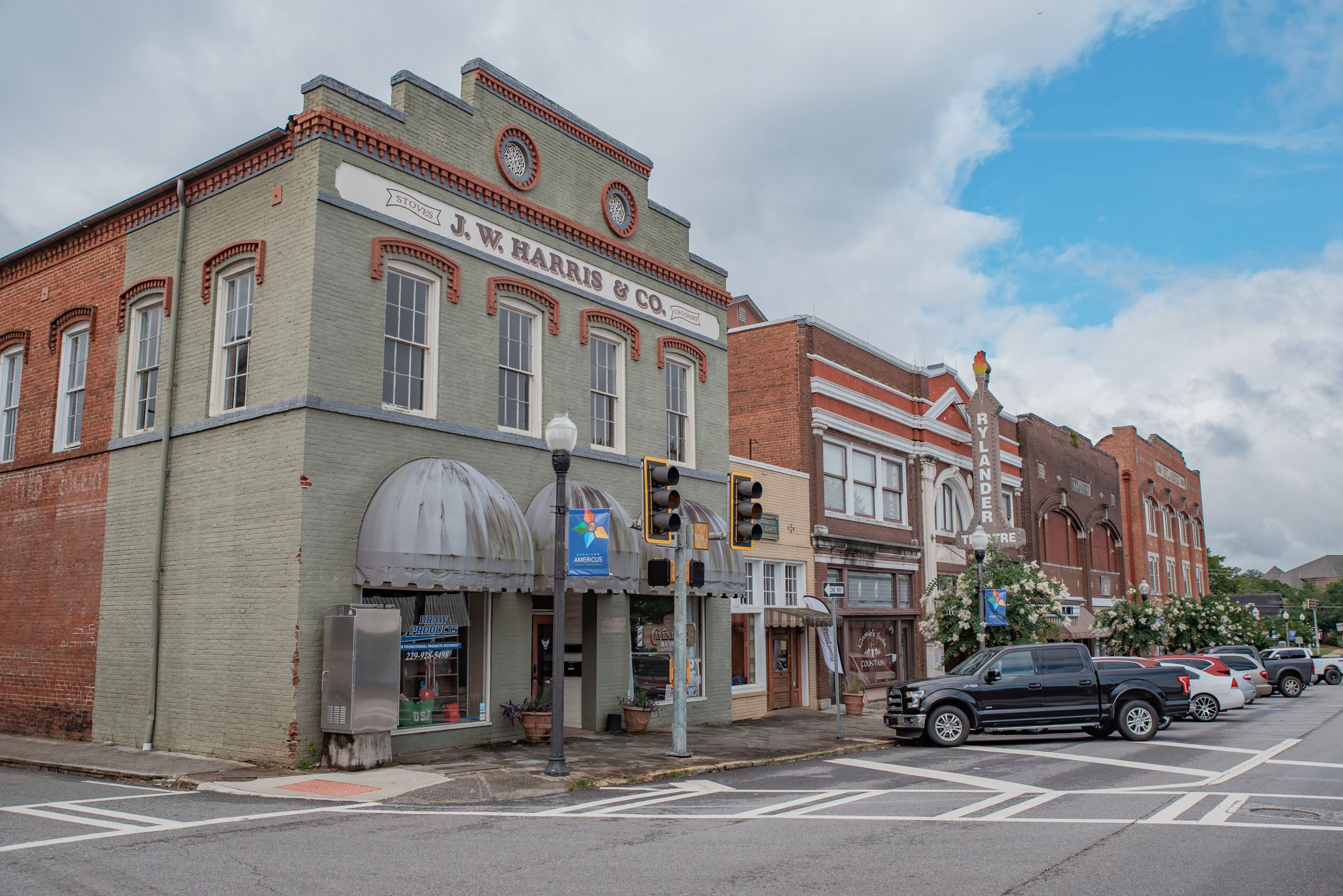
In 1961-62, the Civil Rights Movement was gaining essential mass and momentum. By 1963, the Movement had landed in Americus – and finally found its forward motion. It was here, in the Sumter County Courthouse, that Dr. King was jailed after his arrest in Albany. This arrest, along with a massive spike in local Black voter registrations, brought attention to the work being done in Sumter County and its role in turning the national tide. Today, visitors can see the historical marker at the rebuilt courthouse and the preserved door from Dr. King’s jail cell, a poignant symbol of a fight that changed history.
From sacred churches to city streets, these Georgia sites along the U.S. Civil Rights Trail offer more than lessons from the past – they offer inspiration for the future.


